How to puha receipe
hello guys i guide you how to make puha in 10 minutes in morning breakfast
Lets Start!! ;)
Poha recipe is a popular Maharashtrian breakfast made from flattened rice, herbs and spices. It is a staple breakfast in our home which we all love. In this post, I share two tasty recipes that are vegan and gluten-free.

- 1. Kanda Poha (With Onions)
- 2.Kanda Batata Poha (With Onions & Potatoes)
What is Poha
1. Flattened rice or beaten rice
Beaten rice, flattened rice or parched rice are the different words to denote Poha. To make beaten rice, the rice grains are parboiled and then flattened.
These are like dry, crisp, thin flakes that can be crumbled or broken easily. Recipes made with flattened rice requires little to no cooking.
In some regional Indian languages, poha is known as phov (konkani), avalakki (karnataka), aval (tamil & malayalam), atukulu (telugu), chira (bengali), paunva (gujarati) and as pauwa in hindi.
Poha absorbs any liquids (water or milk) that they are soaked in and soften. So they can be eaten raw after soaking or cooked a bit.
They are also fried or roasted and made into quick snacks like Poha Chiwda.
In India, we get flattened rice easily. Making any dish with them is a breeze.
If you live outside India, then you can buy flattened rice in an Indian or asian grocery store or online.
There are basically two types of poha available in the market depending on their thickness. One is a papery thin version and the other is a thicker variety.
While in some recipes they can be used interchangeably, but in this poha recipe, always use the thicker poha.
We also get red poha or brown poha (made from red or brown rice). You can even use these to make this breakfast dish.
2. Poha Recipe
Poha recipe is a light breakfast dish. Basically pohe is made by mixing flattened rice in a mix of seasoned spices and onions.
It is ridiculously easy to make poha recipe. To make it more nutritious you can add boiled peas, grated carrots, roasted peanuts, cashews and garnish with coriander leaves (cilantro leaves) and grated coconut.
There are many variations of the recipe. Example: If you are adding potatoes then you can either fry them or steam them. One more tasty version is Indori Poha which has fennel seeds as one of the spices.
I have grown up having pohe for breakfast apart from Idli, Dosa and Upma. My mom used to make it often for breakfast or for brunch.
About Kanda Poha
In Marathi language, the word “Kanda” means onions. By now you know that the Maharashtrian word for flattened or beaten rice is Poha. Hence the term Kanda Poha or Kanda Pohe.
In some variations of poha recipe, potato is added instead of onions. Some people like to add both onions and potatoes.
I always add red onions that give a nice sweetish taste. If you are not a fan of red onions, you can try making the recipe with white onions or yellow onions.
How to make Poha
Preparation
1. Rinse 1.5 cups thick poha (flattened rice) in water until they soften. Use a strainer or colander to rinse these light rice flakes.
Remember not too rinse them too much or else they will break and become mushy. During rinsing, they will absorb water and soften.
The poha flakes ideally should soften but remain in shape and intact. If the they do not become soft, sprinkle some splashes of water on them so that they absorb some extra water.


Making Poha
5. Heat 2 tablespoons oil in the same pan. Crackle the mustard seeds first. Use peanut oil or sunflower oil or any neutral flavored oil.


8. Add the roasted peanuts and stir.

9. Add poha and mix gently.

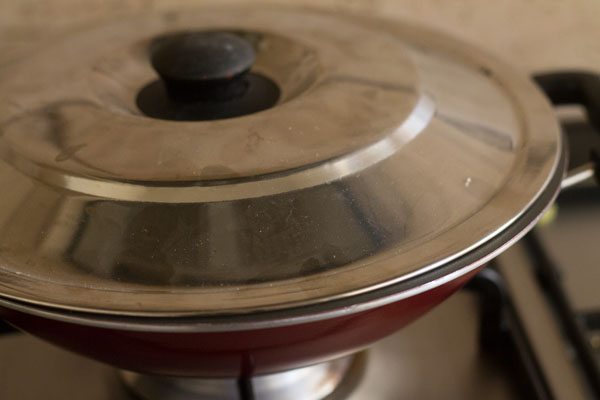
10. Cover and steam for about 2 minutes on a low heat.
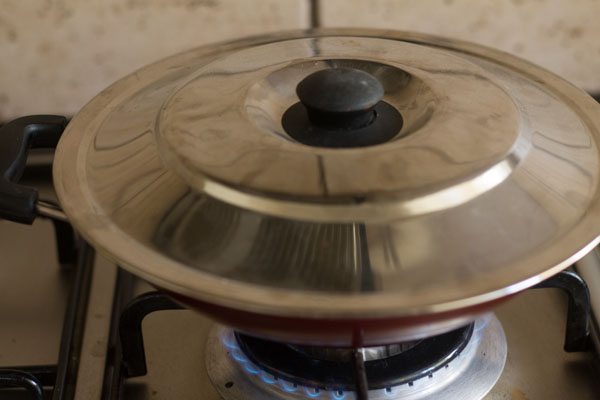
11. Switch off the heat and let poha remain covered for 1 to 2 minutes.
12. Remove the lid and sprinkle 1 teaspoon lemon juice, 2 to 3 tablespoons chopped coriander leaves and 2 to 3 tablespoons grated coconut.
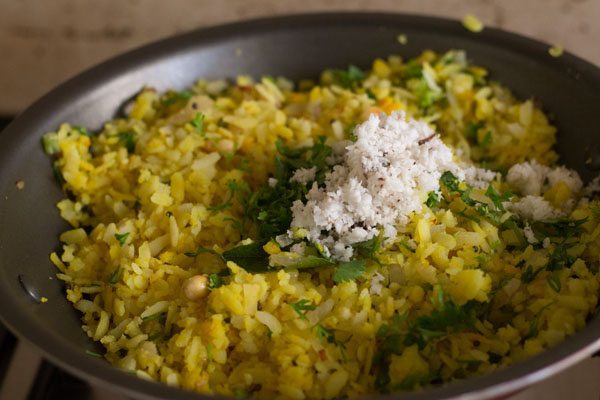
13. Mix gently and serve.
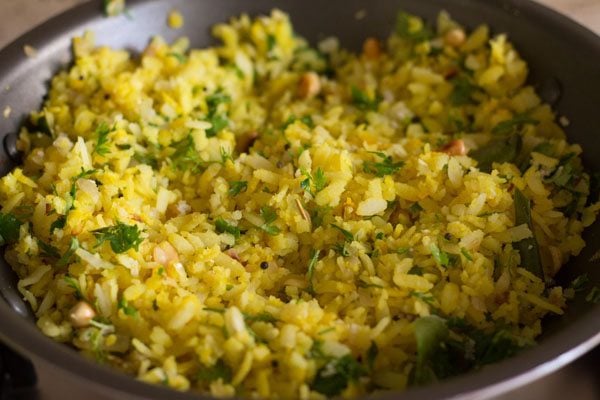
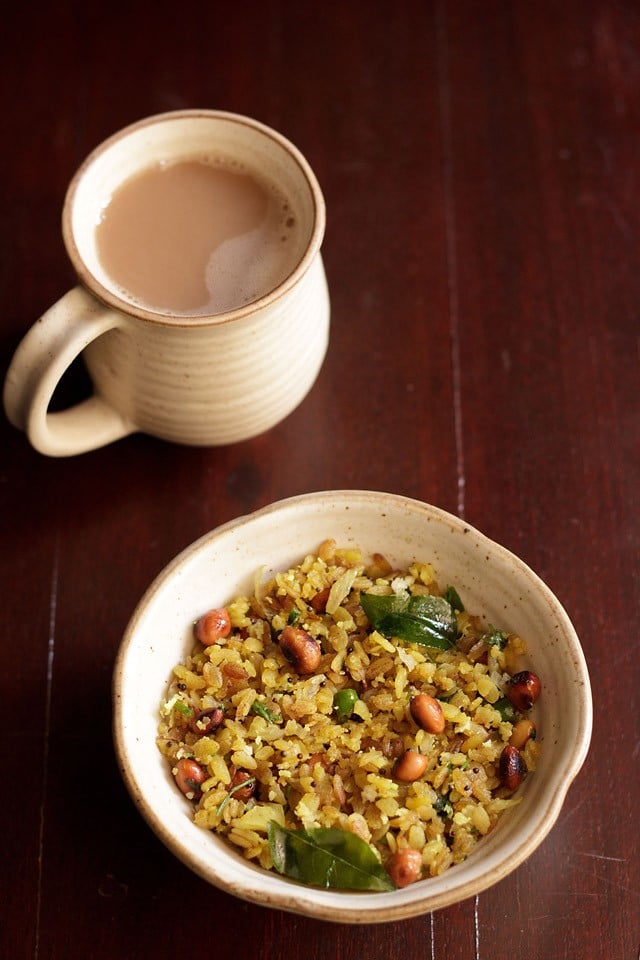
14. Serve kanda poha hot or warm with ginger chai or hot coffee. You can also sprinkle some sev (fried gram flour vermicelli) while serving.
Helpful Tips
- Texture of soaked poha: After rinsing them well, press a flake and if it gets crushed/mashed easily then it is soft enough to be cooked. Otherwise, if it is dry and does not get mashed easily then sprinkle little water over it and gently mix well.
- Rinsing: I usually rinse these flakes in a strainer or colander under running water and don’t soak them in water. Rinsing these softens them easily.
- Veggies: You can also add boiled peas or grated carrots. This makes this dish more healthy and nutritious.
- Garnish: I also like to add grated fresh coconut in my poha recipe but you can skip if you do not have coconut.
- Type of poha: I use both red and white poha to make kanda poha. I have updated this post with step by step photos, where the dish is made with white poha but the final photos has the dish made with red poha.


Comments
Post a Comment